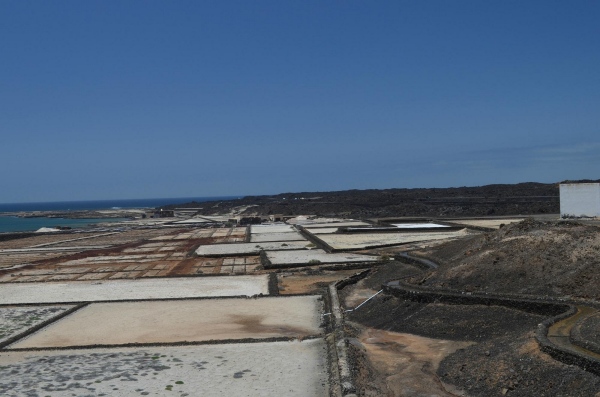

The Janubio Salt Flats in Lanzarote: how to explore their salt landscape
The Janubio Salt Flats are one of the most unique landscapes in the south of Lanzarote. They are not just salt flats or a quick stop along the road. They are a place where sea salt, the Janubio lagoon, the sea, volcanic soil and an important part of the island’s history come together. As I’m from Lanzarote and have been to the Janubio Salt Flats quite a few times, I think it’s worth explaining them from a practical, local perspective. They’re beautiful, yes, but it’s worth knowing where to get the best views, when to go, whether the guided tour is worth it, and what details to check before booking.
In this guide, I’ll tell you how to get to the Janubio Salt Flats, what to see from the viewpoint, what to bear in mind regarding prices, opening hours, guided tours, the sunset and other nearby places such as Janubio Beach, Los Hervideros and El Golfo. If you just want to enjoy the scenery, the viewpoint may be enough. If you’re interested in the history of salt, the salt-making trade and the traditional production process, then a guided tour might be more worthwhile – provided you check the timetables, language, price and conditions in advance.
What are the Janubio Salt Flats and why are they worth a visit?
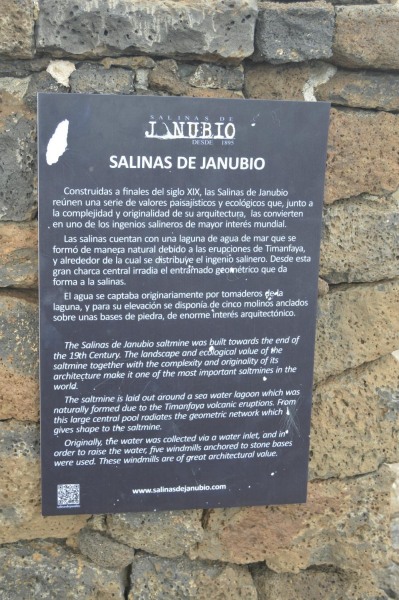
The Janubio Salt Pans are one of Lanzarote’s most unique landscapes and a living example of the island’s salt-making tradition.They consist of a series of ponds, walls and salt flats where seawater, the sun and the wind combine to produce sea salt using traditional methods.
As well as their productive value, they are notable for their scenic beauty, their history and their close connection with the volcanic landscape of southern Lanzarote
They are probably the best-known salt flats on Lanzarote and one of those places that you recognise instantly thanks to their geometric pools, the white hues of the salt, the reflections on the water and the colours that change with the light.
Yes, the Janubio Salt Flats are well worth a visit, especially if you’re travelling around the south of Lanzarote. It’s a place steeped in history, with stunning scenery, a long tradition of salt production and a very special atmosphere.
That said, my advice as someone from Lanzarote who knows the area well is to go with clear expectations. If you’re looking for a lovely, free stop-off, the viewpoint is ideal. If you want to learn about salt, the salt-making trade and the traditional production process, the guided tour could be interesting, provided you check the price, timetable, language and terms and conditions in advance.
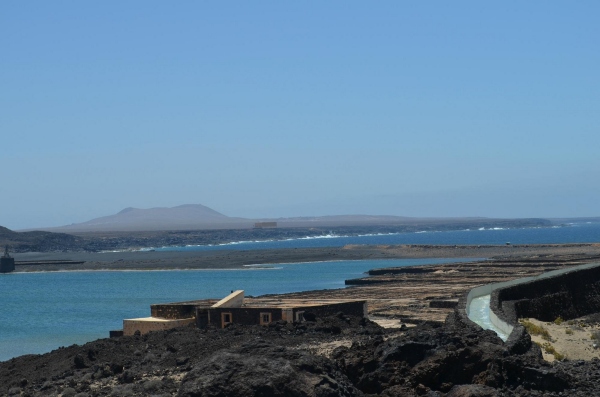
A salt-pan landscape set amongst lava, the sea and a lagoon
What makes Janubio special is the contrast. On the one hand, you have the volcanic black that is so characteristic of Lanzarote. On the other, the white of the salt, the pinkish hues of some of the salt pans, the lagoon, the beach and the open sea.
It’s a unique landscape, very striking and quintessentially Lanzarote. From the viewpoint, it’s easy to see why so many people stop here, even if only for a few minutes, whilst touring the south of the island.
In my experience of the area, the Janubio Salt Flats aren’t a place to rush through if you enjoy taking in the scenery. The charm lies in taking in the whole scene, watching how the light changes and realising that this isn’t just a picture-postcard view created for tourists, but a place with a history and a tradition behind it.
Janubio salt and Lanzarote’s salt-making tradition
Janubio salt is an integral part of the area’s identity. For years, salt production played a vital role in preserving fish and in the local economy. Today, it continues to hold value as a product, as part of our heritage and as a reminder of the salt-making tradition.
Salt is produced from seawater, the sun and the wind. The water passes through different stages, becomes concentrated through evaporation and eventually crystallises in the salt pans. This process involves terms such as ‘evaporation ponds’, ‘salt pans’, ‘brine’, ‘fleur de sel’ and ‘manual harvesting’.
You don’t need to know all the technical details to enjoy Janubio, but understanding the process helps you see the salt flats in a different light.
Where are the Janubio Salt Flats?
The Janubio Salt Flats are in Yaiza, in the south of Lanzarote, next to the lagoon and Janubio Beach. It’s a place that’s very easy to include in an itinerary if you’re visiting Los Hervideros, El Golfo, Playa Blanca or the Timanfaya area.
Janubio Salt Flats in Yaiza, in the south of Lanzarote
If you’re looking for the Janubio salt flats in Lanzarote, you’ll probably want to know whether it’s worth making the trip there. My answer would be yes, especially if you’re already exploring the south of the island.
There’s no need to spend half a day there if you just want to see them from the outside. You can stop off at the viewpoint, take some photos, enjoy the scenery and carry on with your walk. If you’d like to find out more, then you might want to consider a guided tour.
Janubio Lagoon, Janubio Beach and the surrounding volcanic landscape
The Janubio lagoon is key to understanding the area. The salt pans are laid out around it, creating that mosaic of ponds and lines that can be seen so clearly from high vantage points.
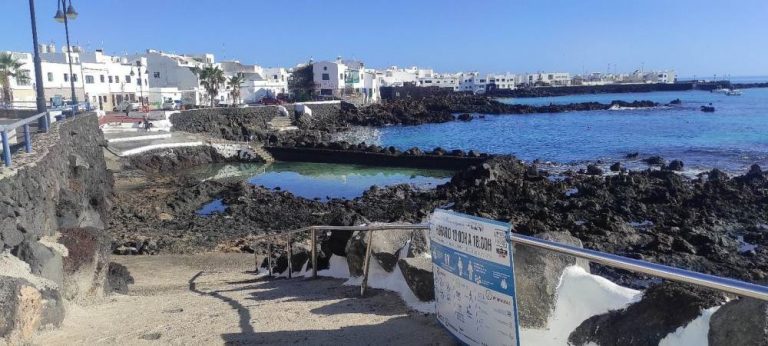
Janubio Beach is very close by and rounds off the area. It is a volcanic, pebbly beach, more suited to admiring the scenery than for a comfortable swim. The combination of the beach, the lagoon, the salt pans and the lava is what gives this area such character.
How to get to the Janubio Salt Flats
Getting to the Janubio Salt Flats is easy if you go by car. For this sort of trip around Lanzarote, a car is the most convenient option as it allows you to combine several nearby stops without having to rely on timetables.
How to get there by car from Playa Blanca, Yaiza or Puerto del Carmen
Janubio is relatively close to Playa Blanca and makes for a very natural stop if you’re heading towards Los Hervideros or El Golfo.
From Yaiza, it’s a quick drive down to the coast. And from Puerto del Carmen, you can include the salt flats as part of a tour of south-west Lanzarote.
The easiest thing to do is to search for ‘Salinas de Janubio’ or ‘Mirador de las Salinas’ in your browser, depending on whether you want to visit the site itself, go to the viewpoint, or simply view the complex from the outside.
Where to park to see the salt flats
If you’re going to stop at the viewpoint, you should normally use the designated areas nearby. Avoid stopping illegally on the road, even if the view tempts you to quickly get your camera out.
My advice is to allow a bit of extra time, especially if you want to watch the sunset. Parking, walking a bit, finding the best spot and taking photos takes longer than it seems.
Mirador de las Salinas, the easiest option for a quick stop
The Mirador de las Salinas is the easiest way to enjoy Janubio without taking a guided tour. From there, you can get a good view of the ponds, the lagoon and the volcanic landscape.
Every time I’ve been there, I’ve always thought that the viewpoint is the best way to get a first impression. First you take in the scenery, get a feel for the place, and then decide whether you’d like to book a guided tour or whether that stop is enough for you.
Self-guided tour or guided tour
One of the most common questions is whether it’s worth taking the guided tour of the Janubio Salt Flats or whether it’s enough just to view them from the viewpoint. And this really depends on the type of traveller.
If you’re interested in the history, the salt-making process, fleur de sel and the salt-making trade, the guided tour may be well worth it. If you just want to take in the scenery, take some photos and follow the route, the viewpoint may be enough.
| Option | Advantages | Who I would recommend it to |
|---|---|---|
| Viewing them from the viewpoint | Free, quick, great views and ideal for photos | For those short on time, a tour of the south or a stop for the sunset |
| Guided tour | Explanation of the process, history, Janubio salt and local context | People interested in culture, tradition, salt pans and local produce |
| Combine a visit to the viewpoint with a tour | It allows you to view the whole picture from the outside and then explore it in greater detail | Anyone who wants a more comprehensive experience |
View the Janubio Salt Flats for free from the viewpoint
You can view the Janubio Salt Flats for free from the viewing point and from outside areas. For many visitors, this alone makes it well worth a visit.
If you’re short on time or are following a route that includes Los Hervideros and El Golfo, this is probably the most convenient option.
What does the guided tour of the Janubio Salt Flats offer?
The guided tour helps visitors to gain a better understanding of how the salt-making system works, how Janubio sea salt is produced, the importance of the salt pans, and the role played by the salt workers.
It can also help you distinguish between concepts such as sea salt, fleur de sel, salt pans, evaporation, crystallisation, boiling pans and cutting blocks.
Janubio Salt Flats: prices, opening hours and bookings
Searches for the price of Janubio salt and the opening hours of the Janubio salt works are very common, but it is advisable to exercise caution here as this information is subject to change.
Before booking, always check the latest information on the official website or via the relevant booking channel.
Admission prices for the Janubio Salt Flats and what you should check beforehand
Before buying a ticket, please check:
- Updated price for adults.
- Children’s price.
- Special rates may be available.
- What exactly does the tour include?
- Duration.
- Language of the explanation.
- Exchange and return policy.
- Booking confirmation.
My advice is not to rely on prices quoted in old reviews or out-of-date articles. In tourist spots, prices change, and then you end up saying, “I thought that…”
Opening hours for the Janubio Salt Flats
Opening hours may also vary depending on the season, public holidays, availability or the type of visit. If you are going on a guided tour, please check the time before you set off.
If you’re just going to the viewpoint, you’ve got more flexibility, although the best experience usually depends more on the light than on the time of day.
Book online, language of the tour and refund policy
If you book online, always make sure to:
- Confirmation email.
- Proof of payment.
- Screenshot of the advertised language.
- Time of the visit.
- Meeting point.
- Cancellation and refund policy.
In my view, this is one of the most important pieces of advice. Janubio is a lovely place, but if you’re travelling with a booking, children or a tight schedule, it’s best to have everything confirmed in advance to avoid any misunderstandings.
When to visit the Janubio Salt Flats
The Janubio Salt Flats look very different depending on the light. You can visit them at any time of day, but they don’t have the same feel at midday as they do at the end of the day.
Best time to visit the salt flats and take photos
When taking photos, it’s usually best to go out when the light is soft, especially in the late afternoon. The colours stand out better, the shadows add depth, and the salt flats take on a sense of depth. They look good at midday too, but the light can be harsher and the tones less pleasing.
Season, tour groups and salt production
You won’t always see the same level of activity at the salt flats. Some days may be busier, others quieter, and there may be times when you come across tour groups.
As I know the area well and have been there several times, my advice is simple: go with realistic expectations. Don’t treat the visit as a sure thing. Janubio is well worth a visit for its scenery, history and surroundings, but the actual experience can vary depending on the day, the time and how well it’s organised.
How salt is produced in Janubio
Salt production in Janubio is based on a traditional system that makes use of seawater, wind and the sun. The water passes through different stages, becomes more concentrated and eventually forms salt crystals. It is a seemingly simple process, but it requires knowledge, maintenance and skill.
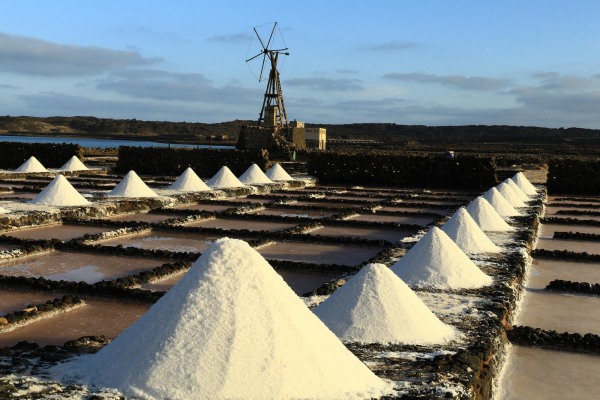
Evaporation, crystallisation, boiling pans and vats
Evaporation causes seawater to lose volume and increases its salt concentration. This is followed by crystallisation, when salt forms in the ponds.
The boiling pits and cutting pits form part of this salt-making structure. They are technical terms, but they help to explain that each area has a specific function within the process.
Fleur de sel, sea salt and traditional methods
Fleur de sel is one of the most prized products. It forms on the surface of the water under certain conditions and is often used in cooking for its texture.
Janubio sea salt can also make for a lovely culinary souvenir from Lanzarote. If you’re interested in local produce, a visit to the shop is a great way to round off your trip.
Salt workers, the craft behind the landscape
Behind the salt flats lies human labour. The salt workers are a fundamental part of Janubio’s history.
That is why I like to see this place not just as a beautiful landscape, but as a space where a traditional way of understanding the relationship between the sea, the land and work can still be felt.
Nature and biodiversity at Janubio Lagoon
Janubio Lagoon also has natural value. The salinity, the water and the tranquillity of the surroundings encourage the presence of birds and other wildlife adapted to these conditions.
Migratory birds and the environmental value of the local area
Janubio can be an interesting place for birdwatching, especially at certain times of the year. You don’t need to treat it as a birdwatching trip, but it’s worth realising that it’s more than just a pretty setting.
Shades of pink, Artemia salina and salt ponds
Some ponds may take on pink or reddish hues. This is linked to salinity, microorganisms and small organisms adapted to the saline environment, such as Artemia salina.
There’s no need to turn this into a biology lesson, but it’s an interesting detail that helps explain why the landscape changes so much.
Site of Scientific Interest and Protected Landscape
Janubio is an area of environmental and scenic value. It is therefore important to visit it with respect, to stay within the designated areas and to avoid behaviour that could damage the environment.
What’s there to see nearby if you decide to go
One of the advantages of Janubio is that it ties in very well with other places in the south of Lanzarote.
- Janubio Beach: Janubio Beach is situated next to the salt flats. It is a volcanic, pebbly beach – striking and very photogenic. I wouldn’t describe it as a comfortable beach for swimming, but rather as part of the landscape.
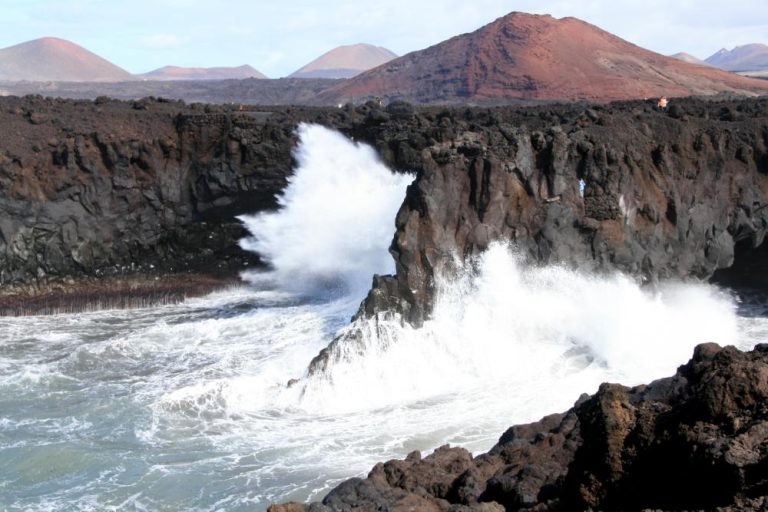
- Los Hervideros: Los Hervideros are very close by and make a perfect stop to combine with a visit to the salt flats. If the sea is rough, the spectacle is all the more impressive.
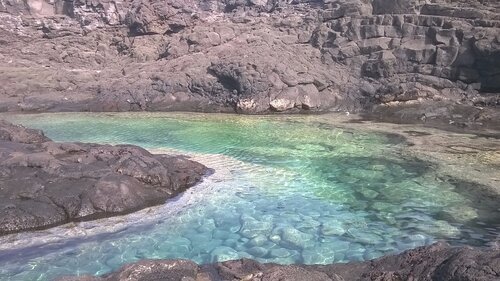
- El Golfo and the route through the south of Lanzarote: El Golfo and Charco de los Clicos also fit very well into the route. A good combination would be Salinas de Janubio, Los Hervideros and El Golfo, especially in the afternoon.
Practical tips before visiting the Janubio Salt Flats
Before you go, decide what sort of visit you’d like to do. Just popping by the viewpoint isn’t the same as booking a guided tour.
A quick checklist before you go
- Decide whether you want to visit a viewpoint, go on a guided tour, or do both.
- Check the latest prices and opening hours.
- Please confirm the language for your visit.
- Keep your booking confirmation if you book online.
- Take some water and sun cream with you.
- Make sure you leave plenty of time if you want to watch the sunset.
- Do not stop in dangerous areas of the road.
- Combine this visit with Los Hervideros or El Golfo if you’re touring the south.
What to take and how much time to allow
For a quick stop at the viewpoint, allow between 20 and 30 minutes. If you’re taking a guided tour, allow more time and check the official duration.
Make sure you wear comfortable shoes, take water and sun cream with you, and bring something warm if you’re going at sunset or on a windy day.
Honest advice tailored to the type of traveller
- If you’re interested in history, traditional crafts and cultural landscapes, you might like this guided tour.
- If you’re short on time, the viewpoint might be enough.
- If you want to take photos, try going just before closing time.
- If you’re travelling with children or have a tight schedule, make sure you confirm everything in advance so you don’t have to rely on improvising.
My advice, as a local, would be to distinguish between two things: the value of the place itself and the specific experience of the organised tour. The landscape of Janubio is well worth a visit in its own right, even if you decide not to go on the tour.
About the author

Maike Famara
Director of Surf Famara. A free surfer from the 1970s, renowned in the Canary Islands, he has surfed on five continents (the entire South African coast, Western Australia, Indonesia, Peru, Chile, Puerto Rico, Panama, France, Portugal, Senegal, Morocco...) and has dedicated himself to teaching and developing new surfers since 1996! You can find him in San Juan or La Santa, where he remains connected to the ocean like the first day.