
Timanfaya National Park (Lanzarote)
Timanfaya National Park is the volcanic heart of Lanzarote. For me it is one of the most spectacular places on the island; it is so close to me that I don’t visit it as much as I would like, but every visit always surprises me with something new: dark lava flows, reddish cones and a silence that seems to be from another planet. Here is a complete, practical and up-to-date guide to help you plan your visit to Timanfaya National Park (Lanzarote) without stress.
Timanfaya is unique even for those of us who live here. If you adjust the plan (get up early, look at the tickets and timetable, contemplate the Unusual Visit and decide whether to eat at El Diablo), the experience is worth it. Combine it with La Geria or the volcanic coast and you have a great day out.
Park information: location, climate and ground rules
Timanfaya National Park stretches between Yaiza and Tinajo, on the easternmost tip of the Canary Islands archipelago, in the province of Las Palmas. The semi-desert climate (around 20°C average annual temperature, very little rainfall, and constant trade winds) explains the landscape: young lava and lapilli/rofé soils, bare slopes, hornitos (small volcanic formations), and volcanic tubes.
Remember that it is a fragile environment: no drones, no smoking, no leaving the designated routes, and during the Volcano Route, getting off the bus is not permitted. Before setting out, check tickets and the day’s schedule.
How to visit Timanfaya (smoothly and without wasting time)
My favourite route starts at the Mancha Blanca Visitor Centre ( km 9.6 of the LZ-67): in half an hour you understand the geology and pick up a map and rules. Then you continue along the “endless road” to the Montañas del Fuego turnoff(Islote de Hilario). There you will see the geothermal demonstrations (geysers of steam and straw that burn with the heat of the subsoil) and then the Volcano Route starts by official bus: 40-45 min, audioguide ES/EN/DE and no stops. Tip: clean glass and window seat; you’ll see seas of lava, jameos due to collapsing pipes, ‘aa‘ and ‘pāhoehoe‘ lavas and the Valley of Tranquillity.
If you want to go deeper, try the Unusual Visit: small group with guide, access to restricted areas (such as Montaña Rajada or the Tinecheide Refuge) and an aperitif at the end. For me it was worth it: you see more than with the standard visit and in a very well cared for atmosphere.
Visit plan in 6 steps
- Mancha Blanca Visitor Centre: map, rules and geological context (20-30 min).
- Access by LZ-67 to Montañas del Fuego (Islote de Hilario).
- Tickets and Volcanoes Route by bus(40-45 min, no descents, audioguide ES/EN/DE).
- Geothermal demonstrations and El Diablo viewpoint/terrace (photos and images).
- Option Unusual Visit or OAPN routes (Tremesana/Litoral) if you want to walk and learn.
- Echadero de Camellos ( 20 min) or photos on the infinite road (LZ-67), always in designated areas.

Tickets, opening hours and best times
Standard ticket includes Fire Mountains + bus route. Recently, most reviews quote around €22 general and €17.50 resident: take this as a guide and confirm when planning. Where there is online purchase, it helps, but the real bottleneck is parking.
Tourist operations are concentrated from morning to afternoon (usually around 9:00-17:00 and last access before closing time or until full capacity is reached). What determines your experience is what time you arrive: mid-morning queues form. One day, entering around 10:30, I had a 60-90 minute wait; another, early in the morning, almost nothing. At peak times, they usually warn you of the time you have to go up before the detour: if it’s not worth it, come back later. In addition, the afternoon provides magnificent light for photos/images of the Timanfaya National Park.
Anti-queuing advice (capacity and timing)
- Get up early or aim for the late slot: avoid the mid-morning peak.
- If the panel announces long wait, reorder and come back later.
- The Islote de Hilario car park is limited: when it is full, the access is closed.
- Bring water, a hat and sunscreen: you will be waiting in the sun.
How to get to and access to Timanfaya Park
The practical way is by car on the LZ-67. There is no public bus service directly to the park; there are bus lines to Yaiza and Tinajo and from there a taxi to the access. Useful distances: Playa Blanca or Puerto del Carmen ~25-30 min; Arrecife 30-35 min; Costa Teguise 40-45 min. Organised excursions are a convenient alternative if you don’t want to worry about parking.
Islote de Hilario car park (essential)
This is the only car park inside the park and the starting point of the Volcanoes Route. It has limited capacity and, when full, access is temporarily closed; there are no alternative car parks inside.
The ground is gravel and sloping: open the gates carefully and follow the staff’s instructions. You can only stay during official opening hours; there is no overnight stay or camping.

What to see without running
The focus is Montañas del Fuego and the Islote de Hilario, but Timanfaya and its surroundings offer more: the Echadero de los Camellos offers a camel ride of about 20 min (total activity ~45 min, with museum, bar-shop, toilets and photo service), the Ruta de Tremesana ( from Yaiza) and the Ruta del Litoral ( short guided version and a long regulated version) allow you to walk where appropriate, Caldera Blanca or Los Rodeos -already in the surroundings- complete the day. If it suits you, eat at the Restaurant El Diablo: geothermal heat cooking, inside it’s hot, I recommend the chicken thighs and the chorizo (you pay for the experience).

A glance at history (to understand what you are stepping on)
Before the black landscape, Lanzarote was already inhabited by the mahos (Berbers), who adapted to the aridity with maretas, agriculture and livestock farming. Europeans arrived (Lancelotto Malocello in the 14th century) and the Norman-Spanish conquest (1402) reorganised the island with Yaiza gaining importance; 16th-17th centuries, pirate attacks and depopulation.
Everything changed with the eruptions of 1730-1736: almost 174 km² were buried, villages like Chimanfaya, Santa Catalina or Maretas disappeared and the landscape of the Montañas del Fuego was born. In 1824 Tao, Nuevo del Fuego/Chinero and Tinguatón came into being, completing the picture. Then came the reconstruction (vines in La Geria, fig trees in lapilli pits), the end of the manorial regime and, in the 20th century, the rise of geothermal tourism on the Islote de Hilario.
With the intervention of César Manrique and Jesús Soto, the Volcanoes Route and the El Diablo Restaurant were designed. On 17/09/1974 the National Park was declared (reclassified in 1981); since then, conservation and education have marked the visit.
Geology for travellers (the essentials)
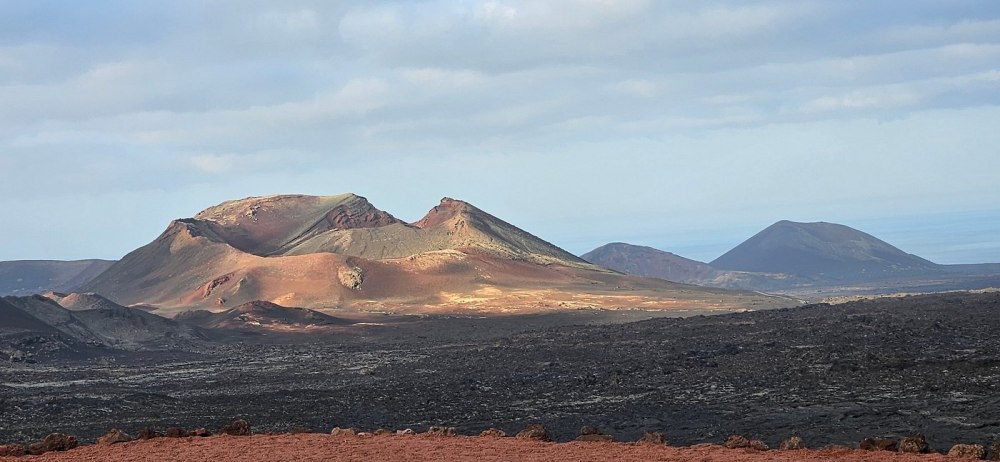
The core of the Fire Mountains gathers Strombolian cones such as Pico Partido, Montaña del Señalo or Montaña Rajada (nested crater and accretion balls), and alignments such as Calderas Quemadas.
Basaltic lavas dominate: the ‘aa’ are rough and sharp; the ‘pāhoehoe’ look like ropes when they solidify. You’ll find seas and lava lakes (such as María Hernández), tubes that collapse to form jameos and little ovens that are very visible in the camel ride in Timanfaya. The thermal activity continues: on the Islote de Hilario very high temperatures are recorded just a few metres below the surface.

Flora and fauna: discreet life in an extreme environment
After the eruptions, lichens were pioneers, opening the door to bryophytes and, later, vascular plants. Today, 116 species of lichens and 298 taxa of vascular flora (with 7 endemic to Lanzarote alone) have been recorded. Near the lava flows and edges you will see sweet tabaiba(Euphorbia balsamifera), verode(Kleinia neriifolia), majorera gorse and Ramalina tapestries, in the northern malpaíses, Stereocaulon vesuvianum whitens the ground.
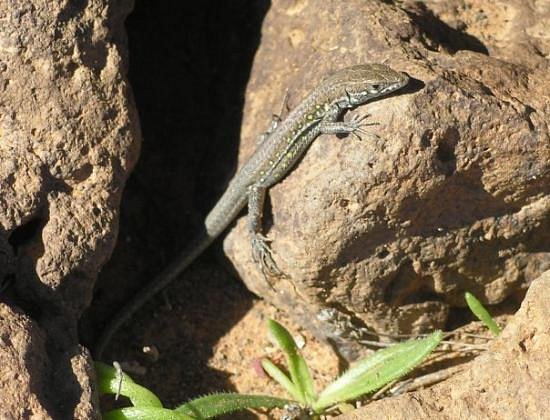
In fauna, almost 200 species have been recorded: 23 nesting birds (from the Cory’s shearwater on the coast to the kestrel or the wren), very specialised invertebrates – even troglobites in tubes -, Atlantic lizard (rare in recent lavas) and the nocturnal perenchen. The Canarian shrew is the only native mammal, rats and feral cats are controlled for their impact on nests.
Compact comparison of visit options
| Option | Duration | Getting off the bus? | Ideal for | Reservation? |
|---|---|---|---|---|
| Route of the Volcanoes (bus) | 40-45 min | No | First visit / families | At the box office/online |
| Unusual Visit | ≈2 h | Yes (selective) | Deepening and learning | Yes (quotas) |
| Tremesana / Litoral (OAPN) | 2-3 h | Yes | Nature and hiking | Yes (free of charge) |
Photography tips and highlights
If you go for photos of the Timanfaya National Park, the afternoon offers lateral light that enhances textures in lava flows and hornitos. The LZ-67 provides clean framing (always from designated areas).
Clean windows and glass in the bus. In windy weather, picón (ash sand) gets everywhere: it protects the lenses and prevents changes in optics in the open air.
What to bring (basics)
- Water (≈1 L per person)
- Cap/hat and sunscreen
- Closed and comfortablefootwear
- Jacket or thin sweatshirt (wind/trade winds)
- Mobile phone with battery / camera + cloth for the picon
- Card/cash for tickets and extras
- DNI/NIE if you are going to use resident discount
- Plan B in case the car park is full
What to visit the same day from Timanfaya
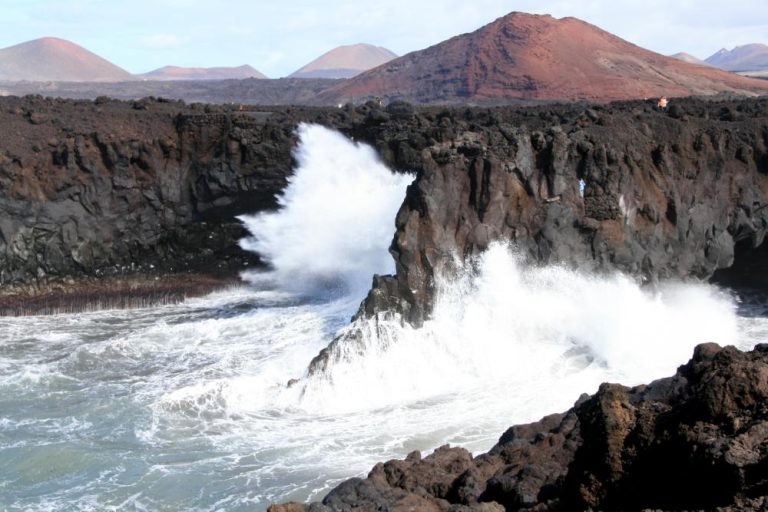
- After the park, head down to the south coast to finish off the day. First, Los Hervideros (10-15 min by car) awaits you with its black cliffs and spectacular cliffs.
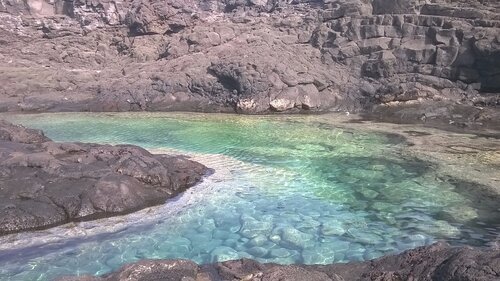
- If the sea is very calm and the low tide coincides, go to the Natural Pools of Los Charcones (≈ 25 min), enter only in safe conditions and avoid swimming if there are waves.
- If you have any energy left after Timanfaya, go up to Famara (≈40-45 min) for the sunset with the Famara cliff in the background. And if you get the itch, book a lesson at the surf school in Famara for the next day.
Frequently Asked Questions (FAQ)
About the author

Maike Famara
Director of Surf Famara. A free surfer from the 1970s, renowned in the Canary Islands, he has surfed on five continents (the entire South African coast, Western Australia, Indonesia, Peru, Chile, Puerto Rico, Panama, France, Portugal, Senegal, Morocco...) and has dedicated himself to teaching and developing new surfers since 1996! You can find him in San Juan or La Santa, where he remains connected to the ocean like the first day.