
Las Grietas de Lanzarote, how to get there, where to park and tips for the visit
If you’re thinking of visiting Las Grietas de Lanzarote, let me tell you something: it’s worth it. It’s not a long excursion and it’s not a huge place, but it is one of those stops that surprise you more when you’re inside than when you first see it from the outside.
In my case, being from the island, Las Grietas surprise me every time I visit them, because when you see them from the outside you can’t imagine how curious it is to walk inside. The best thing is not just the typical photo, but walking between the volcanic fissures, seeing the tones of the rock and feeling that, in just a few minutes, you have arrived at a very different corner of the island.
Quick guide if you want to visit these canyons
- They are next to the LZ-35, between Tías and San Bartolomé.
- The visit is free of charge
- You get there by leaving your car on a dirt road.
- From the car park it is only a few minutes walk
- It is best to go early or late in the day.
- Wear closed shoes, water and be careful when walking.
What are Las Grietas de Lanzarote
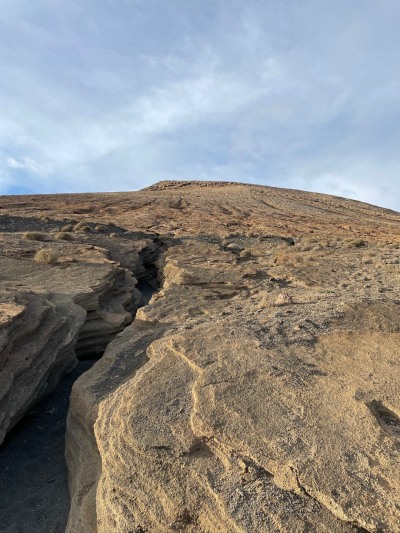
Las Grietas are several open volcanic fissures on the slopes of Montaña Blanca. It is a very striking place because, in a small space, you can see narrow walls, layers of rock of different tones and shapes that you would not expect to find so accessible.
They are understood to be formations of volcanic origin, created by the fracturing of lava as it cooled and then modelled by erosion and the passage of time. Beyond the geological explanation, the important thing for the visitor is that you can visit them on foot in a short and quite visual visit.
In my opinion, it is a highly recommended visit because it doesn’t take up half a day and, even so, it leaves you with the sensation of having seen something different.
Where exactly are they
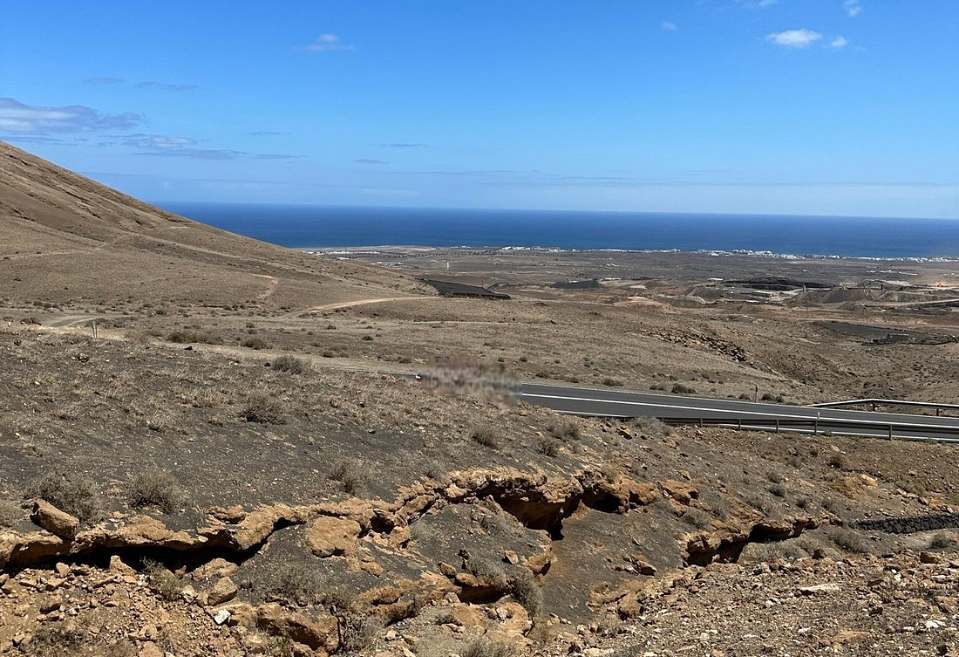
Las Grietas are in the area of Montaña Blanca, next to the LZ-35 road, between Tías and San Bartolomé. If you are driving through this part of the island, it is an easy place to fit into your route.
Keep this in mind: it is not an urban visit or a conditioned space like other tourist spots. You arrive by road, park on a dirt esplanade and walk a short distance until you enter the area of the cracks.
How to get to Las Grietas de Lanzarote
The easiest way to get there is by car. Access is from the LZ-35 and, once you reach the esplanade where people usually park, you only have to walk for a few minutes along a dirt track.
When you arrive you can see that the car park is not the typical signposted car park, so it is advisable to enter carefully and look carefully at where the other cars enter. It’s not complicated, but it’s not the classic perfectly marked tourist spot either.
Tips on how to get there in an easy way
- Take the LZ-35
- Locate the dirt forecourt where there are usually cars.
- Park calmly
- If you have to cross, it is better to use the tunnel you will see as soon as you get there.
- Walk a few minutes to the cracks
- Go slowly as you approach, to recognise the entrance.
Where to park
The car park at Las Grietas is not a tarmac car park, nor is it particularly formalised. It is normal to leave your car on a dirt esplanade next to the road.
In the experiences you shared with me, the same thing is repeated: finding the site is not difficult, but the entrance and exit of the car park can be the most uncomfortable part of the visit. That’s why I would slow down when approaching, check the area carefully and avoid quick manoeuvres.
- Don’t expect an official car park like the one in a tourist centre.
- Entry and exit require caution
- Better not to improvise sudden manoeuvres
- If you have to cross, it is better to use the subway
- First thing in the morning is usually more comfortable
What to see in Las Grietas
The visit revolves around several crevices, although the deepest one is usually the most impressive. There are also other fissures and narrow passageways that make the whole look almost like a small volcanic labyrinth.
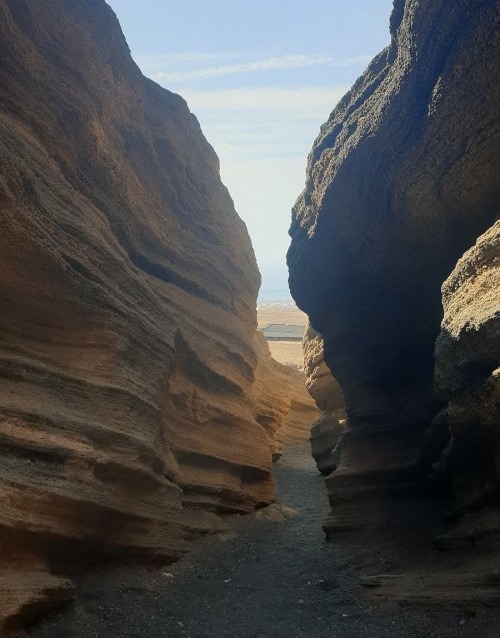
The most striking thing is not only the shape of the crevices, but the colours and layers of the rock when you get inside. From the outside they are striking, but it’s when you get inside that the place really comes into its own. It’s one of those visits that works well because, in a short time, you get a pretty intense sense of the volcanic landscape.
A short stop, very photogenic and different from the typical visit to the Guinate viewpoint. Here the fun is in walking among the rock, looking at the strata and enjoying the contrast of light and shadow inside the crevices
How long does it take to see the whole tour?
If you just want to go down, enter the main crevice, take a few photos and return to the car, you can complete the visit in 10 to 15 minutes. If you want to visit several crevasses at a more leisurely pace, take photos and move around the area a bit, the normal time is 30 to 45 minutes.
It’s best to go with the idea of a short but flexible visit, because you can see it quickly or extend it a little longer if you feel like it. That is precisely one of its advantages: it doesn’t take a long time, but it doesn’t feel like an absurd stop either.
You don’t need a lot of time, but you shouldn’t be in a hurry either. If you like to stop, look and take pictures, you will enjoy it more.
Best time to visit
The best option is usually early in the morning or late in the afternoon. This way you avoid some of the heat, there are usually fewer people and the light is much more pleasant.
I usually go early in the morning, it helps a lot, not only because of the light, but also because you can enjoy it more calmly. You can go at midday, of course, but I don’t think it’s the best time if you want to walk comfortably or avoid a more crowded atmosphere. If you have a choice, go early. And if not, try to avoid the central hours of the day, especially when the sun is strong.
Price, opening hours and access
Las Grietas is a free and open access space. There is no entrance fee, no need to book and you don’t need to buy tickets.
As for the timetable, the most sensible thing to say is that they do not have a closed tourist timetable, but that does not mean that it is worth going at any time. It is advisable to visit them in good light and avoid the hottest times, both for comfort and safety.
What I liked most is that it is a free, free and simple visit, but precisely for this reason it is advisable to go with a bit of common sense. There is no ticket office, no staff controlling access, and no infrastructure designed to guide you.
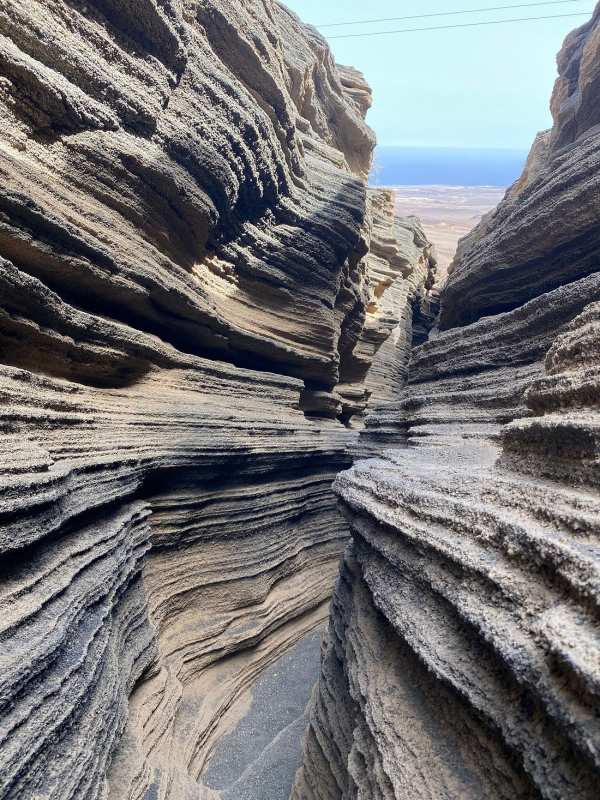
Las Grietas is not a difficult route, but it is an unconditioned natural environment. There is loose soil, sand, narrow areas and parts where it is advisable to watch where you put your foot.
It’s worth wearing closed shoes, because there are sandy sections and some of the steps can be slippery. I also think it’s a good idea to take water, especially if it’s hot, because the area is quite exposed to the sun.
I would be cautious when leaning on the walls or climbing in some areas, because it is still a natural space.
Visiting Las Grietas with children
Yes, it is possible to visit with children, but with common sense. The access from the car park is short, so as a quick stop it can be a good place for a family.
If you go with children, my feeling is that it can be done, but not all the crevices and not all the steps are equally comfortable for everyone. I would consider it as a short visit, without forcing too much and avoiding the narrowest corners if you don’t see it clearly.
What to see nearby to round off the day
If after visiting Las Grietas you feel like extending the plan before or after visiting these canyons, a good option is to combine the route with Caleta de Famara, especially if you like the surfing atmosphere or you want to see a very different area of the island. There we have our surf camp, known throughout Lanzarote, where you can surf or just enjoy the surroundings. Another alternative is Los Charcones, if you prefer to end the day by the sea in a wilder and more volcanic landscape.
About the author

Maike Famara
Director of Surf Famara. A free surfer from the 1970s, renowned in the Canary Islands, he has surfed on five continents (the entire South African coast, Western Australia, Indonesia, Peru, Chile, Puerto Rico, Panama, France, Portugal, Senegal, Morocco...) and has dedicated himself to teaching and developing new surfers since 1996! You can find him in San Juan or La Santa, where he remains connected to the ocean like the first day.